
In recent weeks, growing public attention and scrutiny have been directed at Arbnora Elezi ex. Šahini, a woman who presents herself as an activist advocating for the rights and inclusion of people with disabilities. However, mounting evidence shared by citizens and disability organizations now challenges her credibility and raises serious questions about her true motivations and past activities.

The Rise and Doubts Surrounding Elezi’s Activism
For years, Arbnora Elezi gained visibility appearing in public spaces and on social media, championing accessibility and inclusion issues. She portrayed herself as a dedicated advocate fighting for the community of people with disabilities. Yet, several associations and individuals working closely with that community have distanced themselves from her, citing a stark mismatch between her public image and her actual work.
Representatives of multiple disability organizations assert that Elezi has not engaged in tangible projects or initiatives to improve the lives of people with disabilities. Instead, they accuse her of leveraging these causes mainly for self-promotion and financial gain. “We severed ties a long time ago because her actions didn’t serve the community’s interests but her personal profit,” said leaders from different groups previously connected to Elezi.
Shocking Revelations: Fraud and Fortune Telling
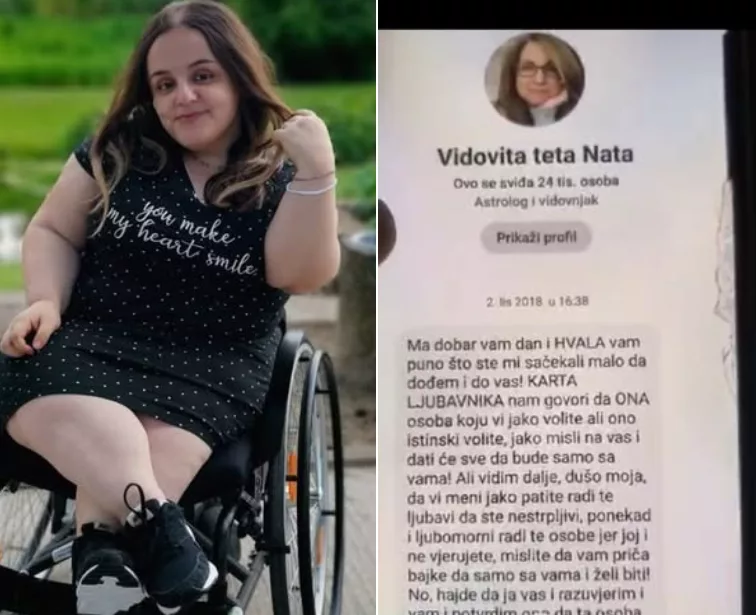
More recently, disturbing details have come to light that further undermine Elezi’s standing as an activist. Evidence shared by members of the public discloses that she operated under the alias “Vidovita teta Nata” (Fortune Teller Aunt Nata), performing online psychic readings and fortune telling. In this role, she solicited payments from people in exchange for supposedly predicting their future and offering mystical services.
Arbnora Elezi, whose maiden name is Šahini, eventually admitted in a livestream responding to followers’ questions that she was indeed involved in this activity. She claims to have ceased the fortune-telling practice, yet the admission itself has deeply damaged her reputation.
In the same video, she also recounted finding a wallet with 100 euros in a shopping mall and returning it to the lost and found, perhaps attempting to soften public opinion with this story.
Community Backlash and Calls for Accountability
The entire situation has sparked intense reactions, particularly among people with disabilities who demand credible, trustworthy advocates to genuinely represent and protect their interests. Many express disappointment and anger at what they perceive as exploitation of their cause by someone who cared more about personal enrichment than community welfare.
These revelations have ignited calls for transparency and investigation by authorities. Citizens emphasize the urgent need for institutions to verify the allegations of scams and financial misconduct linked to Elezi. The public’s concern grows as reports accumulate in online forums and Facebook groups dedicated to exposing her alleged deceit.
One such group, “Arbnora Elezi – Fraud and Manipulation,” features numerous testimonies from people who claim to have been misled or harmed by her actions. Administrators of the group say the matter has been reported to law enforcement agencies in Germany, where Elezi currently lives with her family.
The Bigger Picture: Why This Matters
This controversy draws attention to an important issue — the vulnerability of marginalized groups to exploitation by individuals pretending to be their champions. For those with disabilities, trustworthy leadership and advocacy are vital for advancing rights and inclusion. The misuse of these roles by self-serving actors not only damages their cause but also undermines public trust in genuine activists and organizations.
The Arbnora Elezi case thus serves as a cautionary tale. It highlights why communities must be vigilant, demand proof of integrity and accomplishments from those who claim to represent them, and hold potential fraudsters accountable.
Summary
Arbnora Elezi, who has long promoted herself as an activist for disability inclusion, faces serious allegations undermining her credibility. Accused by various organizations and citizens of using the cause to gain financially and manipulate public perception, she has admitted to previously working as an online fortune teller under a pseudonym. The fallout has led disability groups and the wider public to distance themselves from her and urge authorities to investigate the allegations thoroughly. This case underscores the importance of integrity and authenticity in advocacy, especially when representing vulnerable communities.
Frequently Asked Questions (FAQs)
Q1: Who is Arbnora Elezi and what has she claimed to represent?
Arbnora Elezi is a woman who publicly identifies as an activist for the rights and inclusion of people with disabilities. She has appeared in media and social platforms delivering messages about the importance of accessibility and advocating for disability inclusion.
Q2: What allegations have been made against Elezi?
Multiple citizen groups and disability organizations have accused Elezi of not contributing to meaningful projects for people with disabilities. Instead, they claim she used the cause to promote herself and earn money. Additionally, she has been linked to online fortune-telling scams where she solicited fees in exchange for psychic readings under a fake name.
Q3: How has the community responded to these revelations?
The response has been strongly negative. Many people with disabilities and their organizations have distanced themselves from Elezi, emphasizing the need for honest advocacy. Online groups have collected testimonies against her and have reported the matter to law enforcement in Germany, where she currently resides.
Q4: Has Elezi admitted to any of these accusations?
Yes, she has admitted in a public video that she was involved in fortune-telling services, which she says she no longer practices. This admission has negatively impacted her credibility as an activist.
Q5: What is the wider significance of this case?
The situation highlights how vulnerable communities, like those of people with disabilities, can be exploited by individuals misusing advocacy roles. It stresses the importance of accountability and transparency among those who claim to represent marginalized groups to maintain trust and effectiveness.

Leave a Comment